Quarterly Job Market Overview - August 2026
This quarter’s review combines national labour market data with our regional insight to give a clear, practical view of current hiring conditions and what they mean for workforce strategy.

Quarterly Job Market Overview - August 2026
This quarter’s review combines national labour market data with our regional insight to give a clear, practical view of current hiring conditions and what they mean for workforce strategy.
People Pulse – Regional Insight
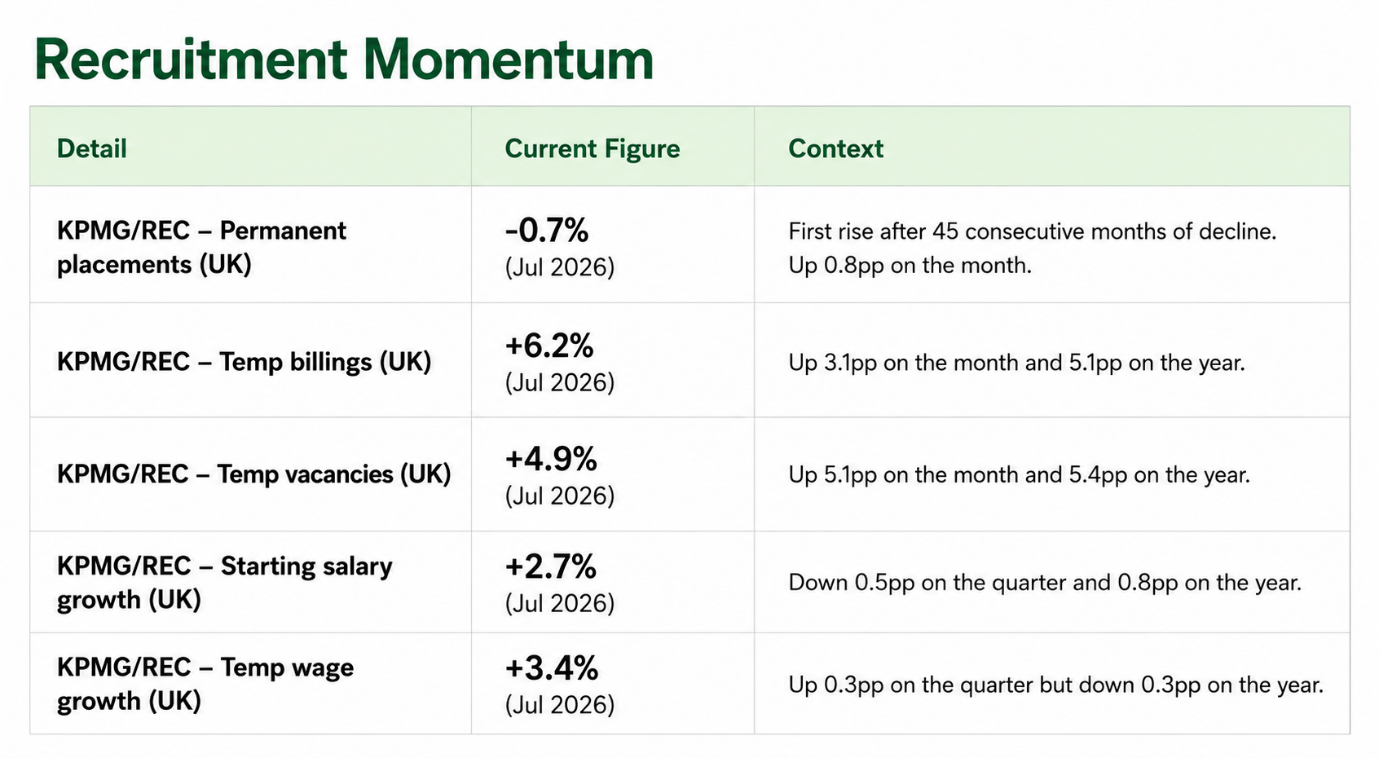
There are encouraging signs that the labour market is beginning to turn. After a prolonged period of caution, permanent placements stabilised in July following 45 consecutive months of decline, while temporary hiring continued to strengthen. The latest ONS and KPMG/REC data both point to improving conditions, even if the recovery remains gradual rather than dramatic.
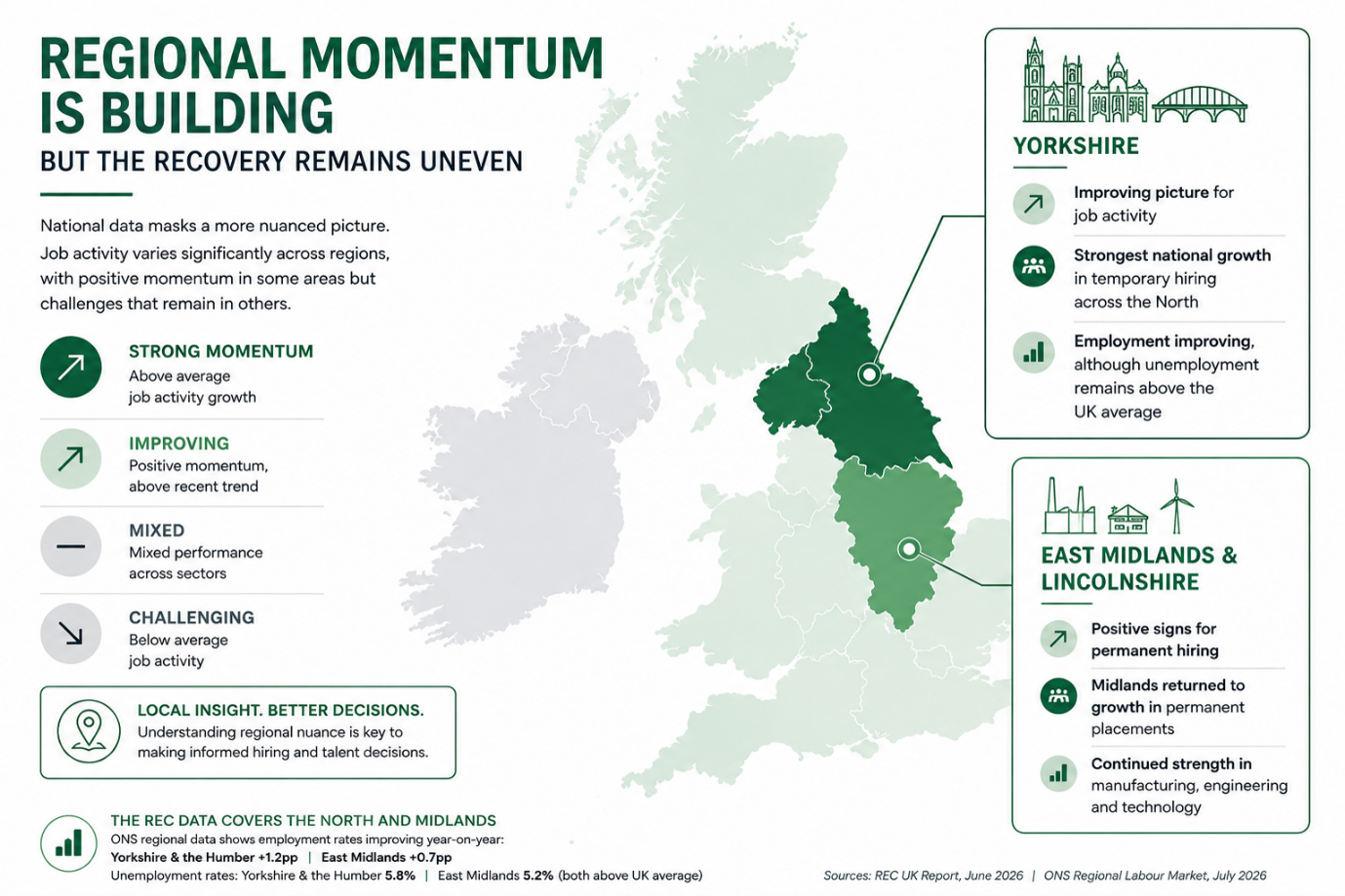
The regional picture is still mixed, but there are positive signals within our core markets. Permanent hiring has returned to growth across the Midlands, while the North has seen particularly strong temporary activity. Employers remain selective and sensitive to cost and confidence, but more businesses appear to be moving ahead with investment and hiring decisions that had previously been delayed.
This aligns with our data which shows a significant increase in the number of new vacancies registered in the past quarter to the previous.
Our analysis combines data from the Office for National Statistics, the Recruitment and Employment Confederation, the Chartered Institute of Personnel and Development, and the REC/KPMG Report on Jobs, alongside our own regional search activity and market observations from across the North, Midlands and North West.
People Pulse dashboard
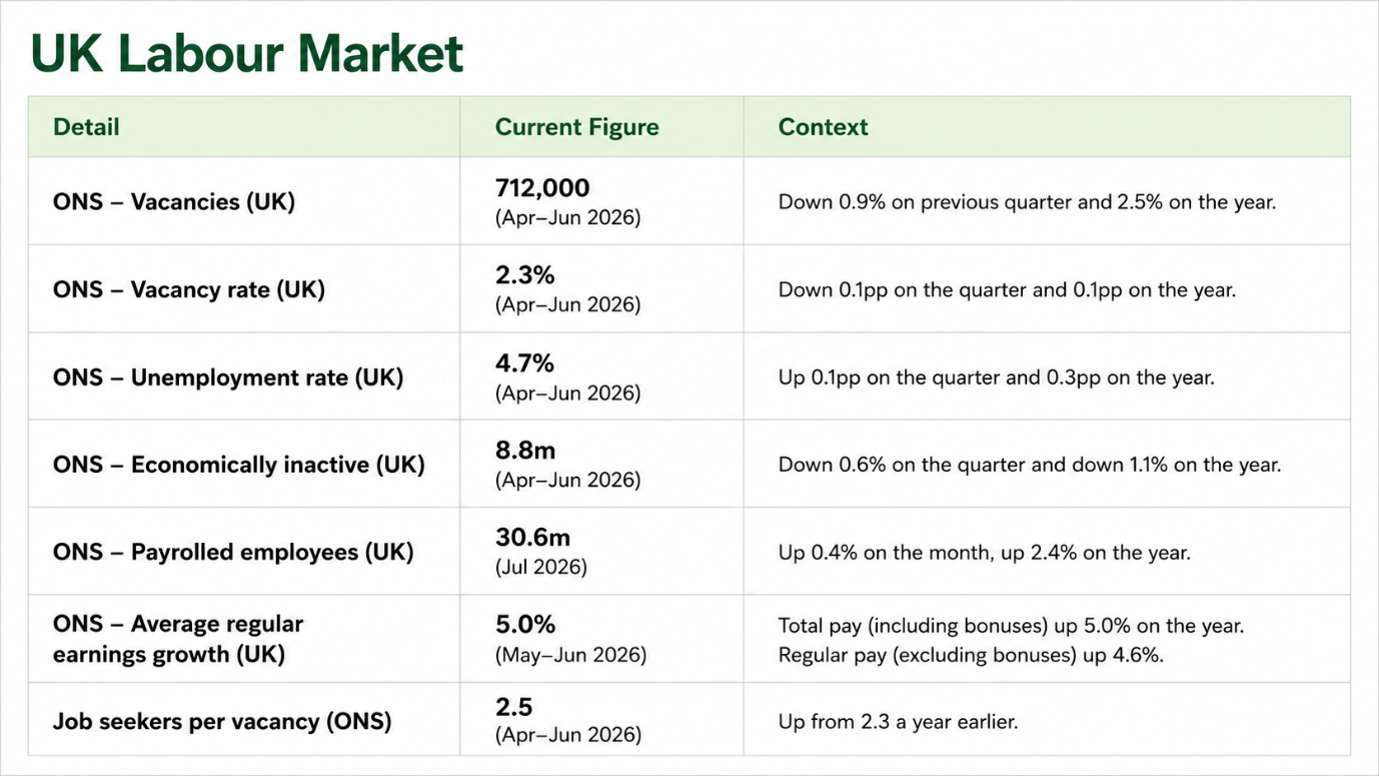
The headline data still points to a labour market operating below the levels of recent years, but there are some important signs of improvement beneath the surface. Vacancy levels continue to edge down and unemployment remains higher, giving employers access to a broader pool of available talent than 12 months ago.
At the same time, wage growth remains relatively strong and the reduction in economic inactivity is encouraging. For employers, this creates an interesting dynamic: candidate availability has improved, but competition for the very best and most relevant talent remains strong. The market may be less candidate-led than it was, but skills, experience and proven capability continue to command a premium.
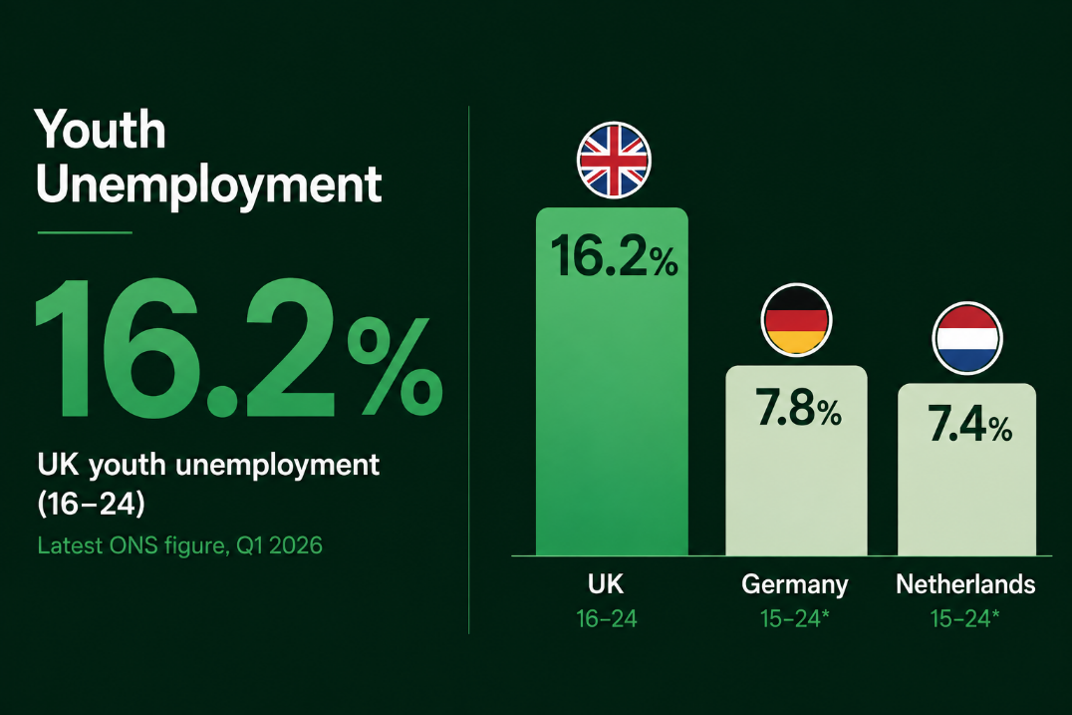
Youth unemployment is one of the headline issues for both government and employers. At 16.2%, the UK rate is materially higher than in countries such as Germany and the Netherlands, and we see the consequences first-hand in the challenges facing school leavers and graduates trying to secure that crucial first opportunity.
Too many young people are entering the labour market without a clear route into meaningful work, while employers continue to report skills shortages in critical areas. We would like to see a much stronger national focus on closing that gap: more apprenticeships and entry-level roles, better links between education and employers, and greater support for businesses that invest in young talent.
Regional Variances
Sectors under the spotlight
Activity levels remain uneven by sector, but the latest data points to a slightly more positive picture than last quarter. Hiring is still being driven by business-critical needs rather than broad-based expansion, with employers prioritising roles linked to productivity, delivery, transformation and growth.
Manufacturing and engineering continue to stand out across Yorkshire, Lincolnshire and the Midlands. The latest REC/KPMG data also shows stronger temporary demand in Blue Collar and Engineering, while our own activity remains concentrated around operational leadership, finance, supply chain and transformation roles. These are areas where capability gaps can quickly affect performance, making recruitment harder to defer.
Private equity-backed and investor-led businesses also remain active, particularly where there is a clear value-creation agenda, succession need or planned growth. In contrast, consumer-facing sectors remain more cautious, with Retail and Hotel & Catering among the weaker areas for vacancy demand.
From a functional perspective, operational roles continue to account for the highest volume of recruitment activity in our own data. That remains one of the clearest themes in the market: organisations may be selective, but they are still prepared to invest where the role has a direct impact on performance, resilience and future growth.
Our View
It remains difficult to take a confident long-term view of the market. Over the past few years, political, economic and global events have repeatedly created shocks, pauses and rebounds in employer confidence, and that volatility is unlikely to disappear completely.
What is encouraging is that the data is now starting to show a more consistent direction of travel. Permanent hiring is stabilising, temporary activity is strengthening and we are seeing more businesses move ahead with investment and recruitment decisions. That improving confidence is reflected in our own business too - over the past quarter, we have grown our headcount by two as we continue to invest in the markets and specialisms where we see the strongest long-term opportunity.
The recovery is still measured, but the signs are becoming harder to ignore.