The AI Candidate Edge: Using AI to prepare for an interview
In the second article in Leighton's AI series, discover how AI can help you prepare for interviews. From researching companies to practising answers and building confidence, learn how to make the most of AI while keeping your personality.
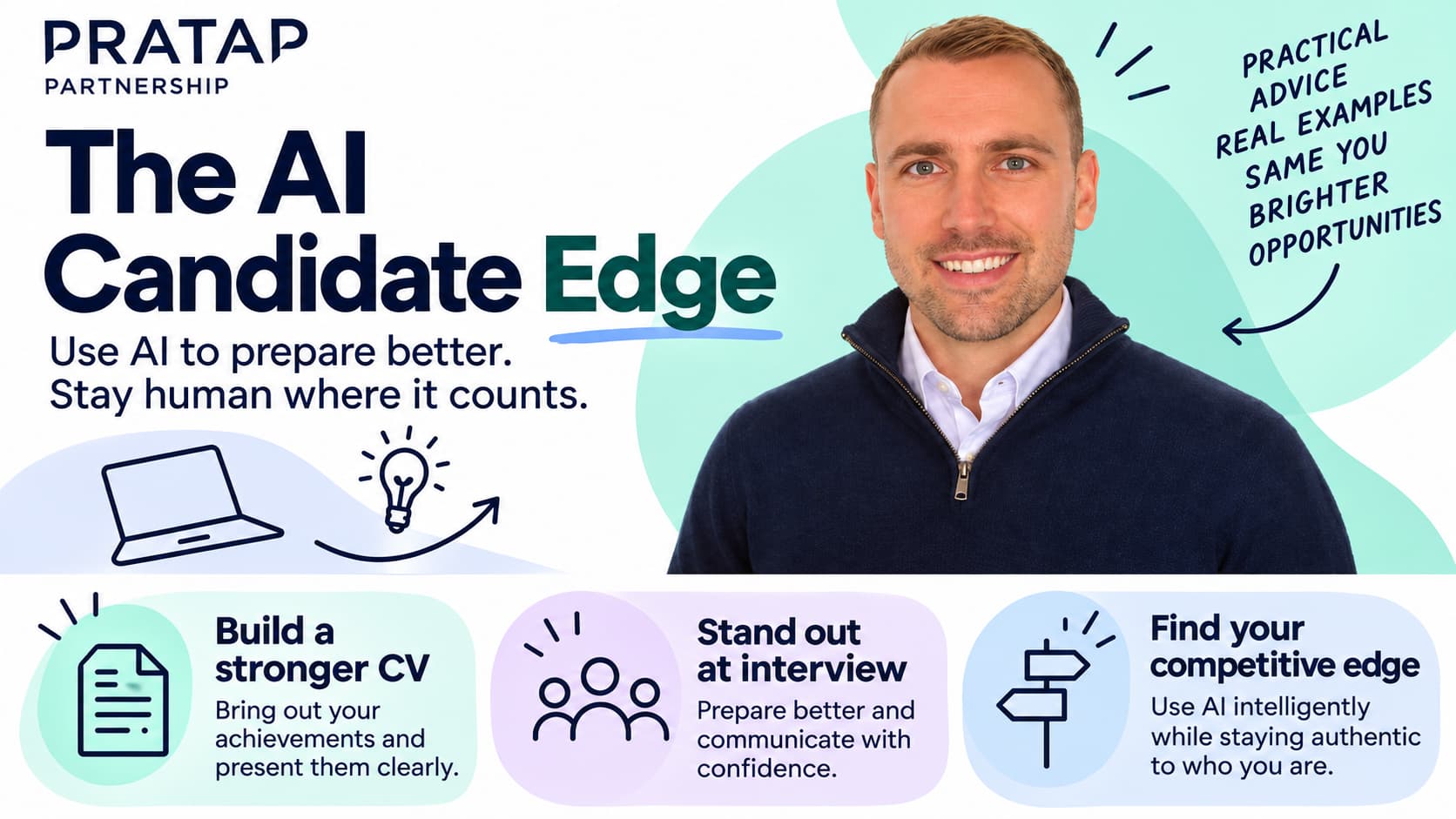
The AI Candidate Edge: Using AI to prepare for an interview
In the second article in Leighton's AI series, discover how AI can help you prepare for interviews. From researching companies to practising answers and building confidence, learn how to make the most of AI while keeping your personality.
How to use AI to prepare for your next interview
AI can be an incredibly useful tool when preparing for an interview. It can help you focus your research, practise your answers and feel more confident explaining your experience.
The company website, job description and conversations with your recruiter still have an important part to play. AI can help you bring that information together and make better use of it.
Here are some practical ways to get started.
Set the scene
As with anything you do with AI, the more relevant context you give it, the more useful its responses are likely to be.
If you read my first article about using AI to improve your CV, you may already have a project containing your experience, achievements and what you are looking for. This gives you a useful starting point for interview preparation.
Next, add what you know about the opportunity: the job description, company information, interview format and who you will be meeting. Include any insight your recruiter has shared about the team and what the hiring manager is looking for.
You could start with:
“Using this job description and my CV, identify the main areas I should prepare for. Where does my experience match, and where might the interviewer want more detail?”
You can also ask AI to help research the business, its financial performance, recent news and the professional background of your interviewers. Ask for sources and dates, then check the original information yourself. AI can make mistakes or present outdated information with confidence.
Use that research to think about what it means for the role. How might a recent acquisition, investment or period of growth affect the finance team? What would you like to understand better?
Use AI as a sounding board
For years, I have encouraged candidates to practise their answers out loud, whether that is with a friend, in front of a mirror or simply talking to themselves. AI gives you another way to do this.
If the tool you use has a voice mode, try using it for a practice interview.
“Tell me about yourself” is a good place to start. It is a question you can prepare for, and having a clear structure can help you settle into the conversation.
Try answering in your own words first, then ask:
“Give me feedback on my answer. Is it clear, relevant to this role and concise? What needs more detail, and what could I leave out?”
The aim is to become comfortable explaining your experience in a way that sounds like you. You do not need to memorise a script, and taking a moment to think is perfectly fine.
You can take this further by sharing the job description and asking:
“Act as the hiring manager for this role. Ask me five relevant interview questions, one at a time. After each answer, give me constructive feedback and ask a follow-up question.”
This can help you spot where your answers need more detail and practise responding when the conversation goes beyond the questions you expected.
Turn your experience into clear examples
One thing I regularly see in interviews is candidates describing what they can do without giving enough evidence of how they have done it.
“I work well with non-finance colleagues” is a starting point. A specific example of influencing a budget holder or helping an operational manager understand their costs gives the interviewer much more to work with.
AI can help you identify useful examples from your own experience and organise them clearly.
Start with the facts: what was happening, what you needed to achieve, what you personally did and what the outcome was. You can then ask AI to help structure your answer using STAR: Situation, Task, Action and Result.
For example:
“Here are my notes about improving a reporting process. Help me structure them into a clear interview answer using STAR. Ask me questions where information is missing, and do not invent any details or results.”
That last point matters. Every example needs to be something you actually did and can confidently discuss in more detail.
You may also have achievements that you overlook because they feel like part of your everyday job. Asking AI to question you about your responsibilities can help bring these out.
Keep your personality
The person interviewing you wants to understand how you think, what you have done and what you would be like to work with.
If every answer sounds overly polished or uses language you would never normally use, your personality can get lost.
Use AI to challenge your answers, improve their structure and highlight gaps. Keep the wording natural, and practise explaining the key points in different ways so you can adapt to the conversation.
A few things to remember:
- Check the research. Verify company information, financial figures and news against reliable sources.
- Use real examples. Do not let AI invent achievements, responsibilities or results.
- Protect confidential information. Remove sensitive employer, client and personal details before sharing material.
- Prepare your own questions. AI can help you develop them, but choose questions you genuinely want answered.
Preparation also includes the practical basics which AI cant help with: planning your journey, arriving on time, dressing appropriately and giving yourself time to settle. During the interview, listening carefully and building rapport matter just as much as the answers you have practised.
AI can be a useful place to organise your thoughts, test your answers and give yourself that extra bit of confidence. The experience, judgment and personality you bring to the interview are yours.
And, of course, we are always here to help with interview preparation. If you would like advice on an upcoming interview or how to explain your experience, please get in touch.