Future-Proofing Talent: Insights from Darren Jones, Head of L&D at AESSEAL
This article shares key insights from Darren Jones, Head of L&D at AESSEAL, whose journey from military leadership to driving apprenticeships, inclusion and the Armed Forces Covenant showcases how organisations can future-proof their talent
Future-Proofing Talent: Insights from Darren Jones, Head of L&D at AESSEAL
This article shares key insights from Darren Jones, Head of L&D at AESSEAL, whose journey from military leadership to driving apprenticeships, inclusion and the Armed Forces Covenant showcases how organisations can future-proof their talent
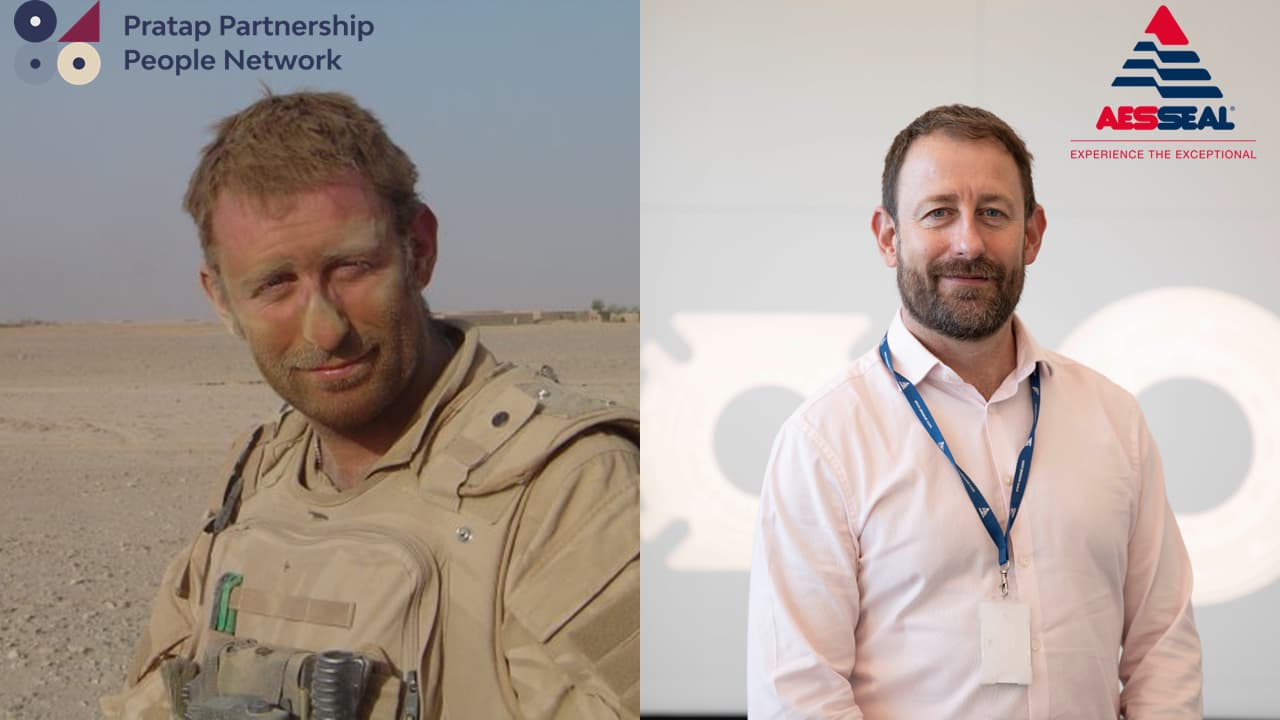
We first heard Darren Jones speak at an event hosted inside the impressive new manufacturing facility of AESSEAL in Rotherham. His story stood out immediately. Darren spoke with clarity and passion about his transition from a long and successful military career into a senior leadership role in business. He also shared the progress AES has made through the Armed Forces Covenant and the development of one of the most successful apprenticeship schemes in the region.
The impact of his work was clear and practical, and we have already introduced Darren to one of our clients to share his insight and collaborate on their own people strategy. We were delighted when he agreed to contribute his experience for our wider network.
There will be many preconceptions about an individual transitioning from a Regimental Sergeant Major role into a learning and development leadership position in industry. Darren is the first to acknowledge this. The stereotype does not match the reality, and his career is a perfect example of how wrong those assumptions can be.
His recruitment into AESSEAL did not come through a traditional route. It began with a direct and opportunistic approach to CEO Chris Rea, who saw the potential in Darren’s leadership background and the mindset he brought from the military. The rest is his story.
How does the military prepare people to become outstanding leaders in industry?
There is a huge untapped opportunity for employers to widen their horizons when it comes to recruiting people from the armed forces. Too many organisations still operate with an unconscious bias that holds them back. The image that comes to mind for many people is a shouty aggressive Regimental Sergeant Major type, someone whose skills are only relevant on battlefields, or a PTSD suffering timebomb that might not be able to adapt to the civilian work environment. That stereotype could not be further from the truth.
Modern military leadership is built on continuous learning, improvement and self-awareness. Every stage of a military career includes structured development in People Leadership. It does not matter whether you are a chef, an engineer or an officer. Alongside your technical training you are continually taught how to lead people, manage teams, coach colleagues and adapt to new environments. You are expected to share knowledge, improve processes and work together as part of a wider mission. That mindset becomes ingrained.
For employers, the real value lies in recognising the transferable skills. Hard work ethic, discipline, team building and the ability to finish what you start are absolutely central to military life. Service men and women are used to working under pressure, handling uncertainty and taking responsibility. They understand what good leadership looks like because they have lived it at every stage of their careers, often from a young age.
When you strip away the misconceptions and look properly at the capability, you find people who are calm under pressure, committed to their colleagues, focused on delivery and keen to keep improving. These qualities are as valuable in business as they are in the military, and employers who embrace them get access to a strong and often overlooked talent pool.
How has the Armed Forces Covenant strengthened AES and its people strategy?
The Armed Forces Covenant is one of the most straightforward and high impact opportunities available to employers, and many organisations still do not realise how simple it is to get involved. At its heart, the AFC is nothing more than a public commitment to support the armed forces community through fair employment. That includes service leavers, reservists, military spouses, and long-term partners who often have to move every couple of years. For businesses, it is a chance to open the door to a really capable and motivated talent pool.
When AES first looked at the AFC, it was clear that signing up aligned with our values.
- The process starts with the bronze level, which is a pledge to show that your organisation supports the armed forces community. It is straightforward and quick, but it sends an important signal.
- Silver is the next step, and this is where you start to put more structure around your commitment. The most important element is offering 10 days paid leave for reservist activities. Chris Rea was immediately on board with that. His view was simple. Why would we not want to support someone to be trained and developed by the military when the business benefits from those skills for the rest of the year. That mindset has made the transition into the Covenant very natural for us.
- Gold requires you to go a step further. You need to demonstrate that your support is embedded across the organisation and that you actively promote the AFC to others. For us, that has meant being proactive. If a veteran contacts AES, I meet them, give them a site tour and help them with interview or CV preparation, even if they may not end up working here. I am also an ambassador to other businesses and offer advice on what has worked for us. That ambassador role is a key part of what takes a company into the gold space.
The benefits for AES have been significant - we attract more service leavers with strong technical backgrounds, especially from engineering trades in the Royal Navy and British Army. We have created a simple and supportive route into employment, and we pride ourselves on being open and accessible. The AFC has also strengthened our culture. It reflects who we are as a business and gives people confidence that we support employees not just in their work lives, but in the whole of their lives.
For employers who are considering it, the AFC is not complicated, and it is not resource heavy. But the impact on recruitment, culture and community reputation is huge. It is one of the best things we have done to demonstrate our support to the Armed Forces community.
What makes AES’s apprenticeship strategy so successful, and what can other employers learn from it?
Our apprenticeship strategy has delivered some exceptional results. In the last 5 years we have also reduced our apprenticeship completion retention rate by more than 20% with only circa 1% of our apprentices not completing EPA. We also take around 20 apprentices each year and have built up a talent pool of more than 300 since 2017. Those numbers are important, but what really matters is how we achieved them.
The whole approach is based on a structured, fair and thorough process. It starts with our assessment centre model, which is much more than a traditional interview. Every candidate goes through four stages:
- First, they introduce themselves in a five-minute pitch.
- Then they take part in a group exercise based on our values.
- After that, there is an individual problem-solving task.
- Only then do they go into an interview with the hiring manager.
What this does is give us a balanced view of the person. We are not looking for a polished performer. We are looking for potential, attitude and whether they are a good fit for AES. Each stage is scored independently by a panel, which takes bias out of the equation and ensures we select fairly and consistently.
Bringing hiring managers into the process has been a big shift as well. It holds them accountable, and it helps them understand how to get the best out of young people.
One of the most helpful things we do is build a talent pool. If someone passes the process but we do not have a vacancy, we keep them in reserve for potential future opportunities.
The biggest lesson for other employers is that you do not need anything complicated. You need a consistent process, clear scoring, involvement from managers and a focus on behaviours as much as technical ability. If you do that, you will recruit better people, improve retention and build a stronger early careers pipeline.
How do you build ED&I into the heart of your apprenticeship recruitment process?
If I am honest, most of the problems employers face with ED&I come down to unconscious bias. It is rarely deliberate, but it is powerful. People naturally gravitate to what is familiar. In recruitment, that often means choosing candidates who look, sound or behave like the people already in the business. The military recognised this many years ago and built structured selection processes to level the playing field and make sure the best candidates were chosen based on potential, not background.
That is exactly the approach we have taken with apprenticeships at AES. Their performance is scored by several people, not just one. If one assessor gives someone a much lower score than the rest, we stop and discuss it. It is the same principle the Army uses on its promotion boards, where unconscious bias training is compulsory for everyone involved.
The real carrot for employers is not ticking an ED&I box. It is improving productivity by widening the talent pool and selecting the best people. When you remove bias, you uncover candidates you might otherwise miss. That is how you bring in more neurodiverse talent, more people from disadvantaged backgrounds, more individuals with different life experience. And very often, they turn out to be some of your strongest performers.
If employers can shift their mindset away from “we need to do ED&I” and instead think “we want the very best people”, everything changes. ED&I becomes a driver of performance, not a corporate requirement. And that is when recruitment really starts to improve.
Final Thoughts
Many people already know AESSEAL for setting the bar when it comes to ESG, responsible business practices and doing the right thing for the environment and the communities they serve. What is increasingly clear is that they are now raising the bar in the same way for learning and development as an employer. Their approach to apprenticeships, ED&I and the Armed Forces Covenant shows what happens when a business invests in people with the same ambition and discipline that it invests in technology and sustainability. It is a model that many others can learn from.